
About
The McMatcher
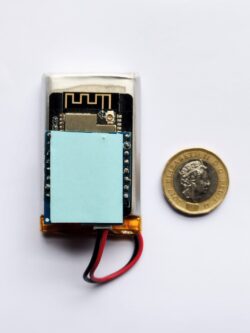
The McMatcher device shown next to a £1 coin.
What is the McMatcher?
The McMatcher device is a matchbox sized device containing a battery, data storage and a sensor which can detect wi-fi and Bluetooth signals which are emitted from wi-fi and Bluetooth enabled devices.
The McMatcher can detect where the signal is located in a zone around the McMatcher.
The McMatcher uses these signals to determine how people travel through urban environments.
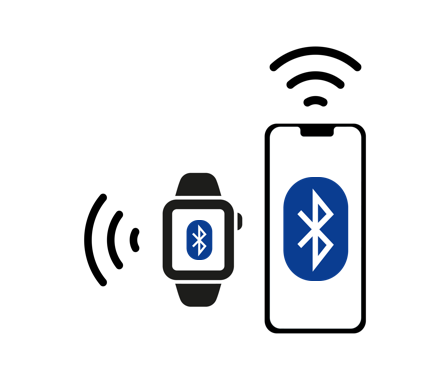
Smart watches and mobile devices are examples of technology which use bluetooth and wi-fi.
How Does the McMatcher Work?
If we deploy lots of McMatcher devices across an area we can use the signals emitted by mobile devices to anonymously determine how people move through complex urban environments.
We don't need to collect any personal data to model pedestrian flow, and the devices will not tell us anything personal about people in the area covered by the McMatchers. We will not be able to identify individual people from the data we collect.

70,000 fans leaving Wembley Stadium on February 6, 2012, after the friendly game between England and Brazil (Photographer Jon Durr).
Why is Understanding Pedestrian Flow Important?
Understanding pedestrian flow enables:
- Better urban design, planning, and space optimisation
- Better crowd management and evacuation plans
- Enhanced accessibility and safety
How the McMatcher Compares to Other Data Collection Methods
There are several other ways that we can gain an understanding of how people move through environments, including manual observation, survey and questionnaire, and analysis of CCTV data.
CCTV
CCTV Cameras
Advantages
- High accuracy
Disadvantages
- High cost
- High complexity
- High cata volume
- Privacy concerns
- Can be affected by lighting and occlusion
Surveys and Questionnaires
Surveys and Questionnaires
Advantages
- Moderate cost
- Moderate complexity
Disadvantages
- Self-reported information so may be subject to bias
- Response rates may be low
- Time-consuming to analyse.
Manual Observation

Manual Counts
Advantages
- Low cost
- Easy to implement
Disadvantages
- Labour-intensive
- Potential for human error
- Give limited data